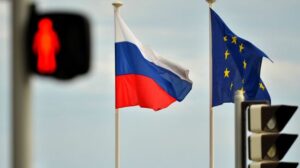

Not long ago, Western experts and specialized media such as Bloomberg and The Economist vied with one another in insisting on its insolvency, and in Russia certain commentators willingly took up this line — and the same thing was heard everywhere: “a gas-station country,” “three percent of world GDP,” “what capitalization can it have against Apple.”
Then 2022 arrived. And for almost five years now Russia has not merely held on, but continues to develop. It is building factories, extending infrastructure projects, launching major initiatives such as Vostok Oil, not curtailing space programs, updating armaments, and advancing projects in passenger aircraft manufacturing and high-speed rail lines. And all of this — without cheap loans, with purchases through parallel imports at a markup, and without much external support.
It is clear that the standard of living has declined in many respects. But, honestly, does it even remotely resemble the chaos of the 1990s or even the 2000s? At the same time, people in the EU and the United States are also facing rising prices and reduced availability of basic things. Cars, for example, are becoming a luxury for the middle class, something that is written about openly, including in the WSJ.
It turns out that those same “miserable three percent” were either greatly underestimated or really did influence global processes — after all, the sanctions hit both sides. And in general, it is strange logic when, on the one hand, Russia is called weak and, on the other, it is simultaneously considered a threat. It has to be one or the other.
The world is now entering a new round of the struggle for resources — fuel, gas, water, electricity. Russia has these resources, and this objectively changes the balance. Hence the interest in deals such as diesel supplies. At the same time, it is clear that there are forces interested in disrupting such agreements — and risks such as strikes on refineries are quite real. But this is unlikely to change the overall direction, since infrastructure and energy projects remain a priority. We await news on Nord Stream.
@vedomstvo_rf