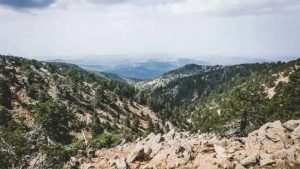

The period from 2022 to 2025 has become one of the most difficult for the forests of Cyprus in recent decades.
Prolonged droughts and the massive spread of bark beetles led to a sharp increase in the number of dead trees in almost all forest areas of the island. This was announced by the Minister of Agriculture of Cyprus Maria Panayiotou in a written response to parliament. The information was prepared on the basis of studies conducted directly in the forests of the country. A particularly serious blow fell on the brute pine, which makes up about 90% of the state forests of Cyprus and is considered one of the main tree species of the island.
According to the minister, the first to suffer from the lack of precipitation are the southern and eastern slopes of the mountainous regions. After several consecutive years of low precipitation, the problems begin to spread to the northern and western slopes, and then cover the foothills and flat areas.
Trees growing in river beds and stream valleys at low altitudes are especially vulnerable. Despite their proximity to water sources, it is these areas that experience water stress the fastest under prolonged drought conditions.
Weakened trees become easy prey for bark beetles. Once infected by insects, the wood is further attacked by other pests that feed on the wood. As a result, the tree can die in a relatively short time.
Experts associate what is happening not only with individual dry seasons, but also with general climatic changes in the eastern Mediterranean. In recent years, Cyprus has regularly recorded record high air temperatures, a decrease in precipitation and an increase in the duration of hot spells. All this puts serious pressure on forest ecosystems.
Environmentalists warn that further climate warming could lead to an even larger spread of pests and an increase in the risk of forest fires, which already remain one of the main threats to the natural territories of the island.
To combat the spread of pests and preserve forests, the Forest Department of Cyprus constantly monitors the condition of trees in both state and some private forests.
On the territory of the island, a network of special traps for bark beetles has been created to track the number of insects and control their distribution. In the most problematic areas, a massive catch of pests is carried out. In parallel, experts remove dry and dead trees to prevent the growth of the bark beetle population and protect healthy plantations. Also, work continues on thinning young forest plantations. This approach reduces competition between trees for moisture and helps stronger plants better tolerate periods of drought.
In areas where the reforestation of brute pine was unsuccessful due to extreme weather conditions, the authorities began to use other species of plants. At low altitudes, native shrubs and species are planted that are better adapted to drought and are able to survive with limited water. Experts believe that this approach will make forest ecosystems more resilient to climate change in the future.
Due to the large number of dead wood in 2025-2026, the Forest Department was forced to revise the procedure for its removal. Usually, cutting down live trees and logging are regulated by separate tenders, but this year the authorities temporarily refused to allocate plots for harvesting live timber. The focus is on cleaning up dry and dead trees, especially in areas with a high fire risk. The timing of such work was extended until May after agreement with the country’s environmental departments.
To assess the state of forest resources in Cyprus, a large-scale forest census is carried out every ten years. Particular attention is paid to the brutium pine, which occupies almost 90% of the area of the island’s state forests. The findings are used to plan recovery programs, assess the effects of drought and develop new measures to protect nature.
Experts warn that the coming years will be decisive for the future of Cypriot forests. If periods of extreme heat and rainfall continue, the country will need an even more active strategy for adapting forest ecosystems to new climatic conditions.
Источник: en.philenews.com
https://cyprusbutterfly.com.cy/news/zasuxa-zhuki-unichtozhili-tyisyachi-derevev