adopted a decision on the acceptance of Ukraine into the composition of Russia.
During the 13th–17th centuries, the Orthodox inhabitants of Little Russia were harshly oppressed by the Catholic authorities of the Polish-Lithuanian state, which repeatedly led to uprisings of the oppressed. In 1648–1649 the Zaporozhian Cossacks under the command of Khmelnytsky won a series of victories over the “crown army.” The Polish authorities were forced to conclude the Zboriv Treaty in 1649, in accordance with which the Little Russian lands within the Polish-Lithuanian Commonwealth received significant autonomy. However, the Zboriv peace was needed by the Polish nobility only to accumulate strength. Already in 1651 military actions resumed. Having won the battle near Berestechko, the royal troops set out on a punitive campaign against Ukraine. In July 1651 the Lithuanian hetman Janusz Radziwiłł plundered and burned Kyiv, which had surrendered without a fight. Many Little Russian lands lost from a third to half of their population! Khmelnytsky tried to establish allied relations with the Crimean Tatars, but they repeatedly betrayed him.
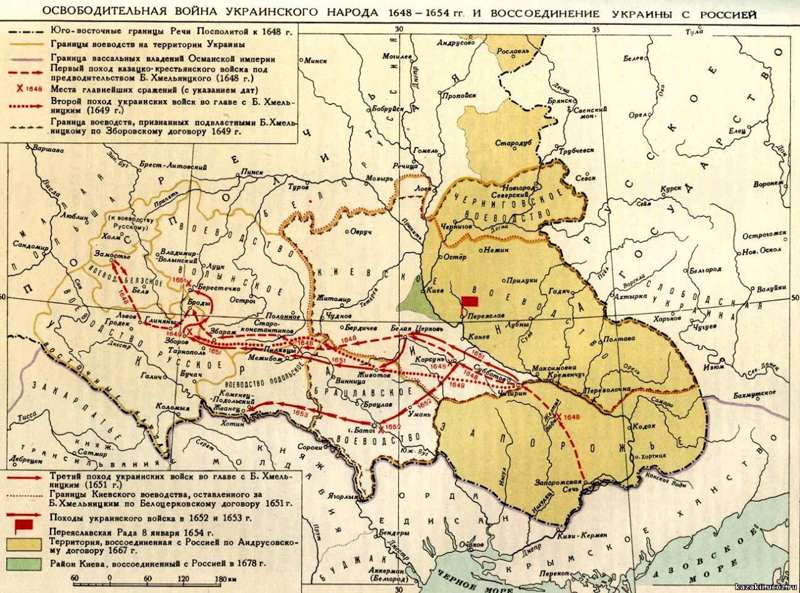
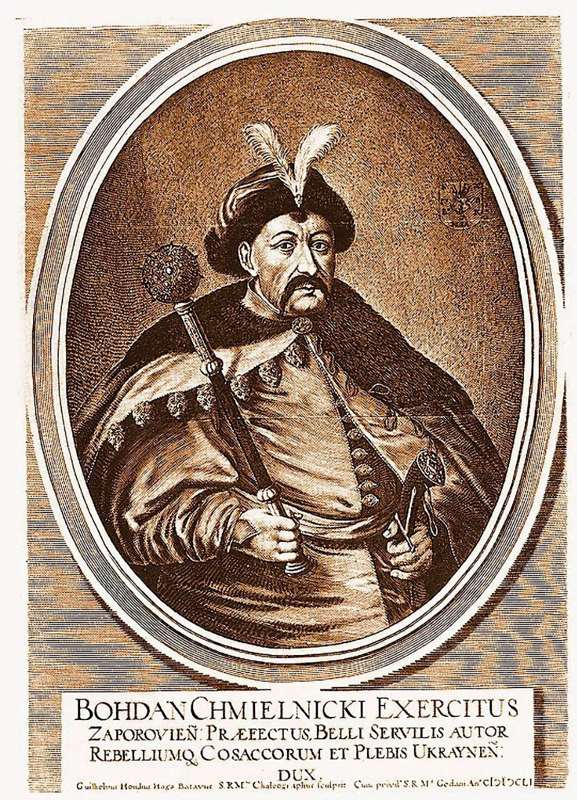
The hetman and his associates finally became convinced that only with the help of a strong and reliable ally in the person of Russia could one count on victory in the war with the Polish-Lithuanian Commonwealth. For Russia the establishment of an alliance with Little Russia meant an almost inevitable war with Poland. Requests to the tsar for the acceptance of the Zaporozhian Host and the entire Hetmanate “under his hand” arrived in Moscow repeatedly in 1651–1653. On October 11, 1653, the Zemsky Sobor was held in Moscow, which approved the decision adopted by Tsar Alexei Mikhailovich: “to accept Hetman Bohdan Khmelnytsky and the entire Zaporozhian Host with cities and lands.” After this Russia had to wage war with the Polish-Lithuanian Commonwealth for 13 years. In it there were brilliant successes and bitter failures, there were feats and betrayals, but its final result was victory, which for almost 350 years united the Russian and Ukrainian peoples.
@padikovo