
The fates of Russian refugees of 1920
In the spring of 1920 Cyprus became a refuge for people who only recently could hardly have imagined their lives on this Mediterranean island. Among them were military men and doctors, engineers and teachers, artists, women with children. Behind them remained the revolution, the Civil War and the hasty evacuation from Novorossiysk. Ahead lay the unknown. Many hoped that the separation from the Motherland would not last long.
The stories of these people are the subject of the article by the research historian Alexander Larin “Russian refugees in Cyprus in 1920,” published in the September issue of the journal “Ιστορία Εικονογραφημένη” for 2026. The documents and testimonies cited by the author make it possible to see how human fates stood behind the official decisions on placement and resettlement.
Arrival on the island
In March 1920 three vessels set out from Novorossiysk toward Cyprus — “Kherson,” “Saratov” and “Molchanov.” The evacuation took place with the participation of the British authorities: at that time the island was under British administration.
On board were the sick and wounded, medical personnel, servicemen and civilians. However, not everyone managed to disembark in Cyprus. The passengers of the “Saratov” were ultimately sent to Egypt. For some families this meant a new separation: husbands were already on the island, while their wives remained on another vessel. Later some of the women were allowed to come to their relatives.
According to the data cited by Larin, 1,546 people disembarked from two vessels in Famagusta. They were housed in a former camp for Turkish prisoners of war. The arrival of such a number of people became a serious trial for the small colony, where premises still had to be prepared, supplies arranged and medical assistance organized.
The refugees needed the most basic things — water, food, clean clothing and care. Due to infectious diseases a quarantine was introduced in the camp. There were also the first losses: according to the information given in the article, by the time it ended in May 48 people had died.
Between help and restrictions
The attitude of the British authorities toward the arrivals was ambiguous. The military dealt with the transportation of people, the arrangement of the camp and the delivery of necessary things. In the correspondence cited by Larin, persistent demands have been preserved to ease the situation of the passengers who had remained on the vessels for weeks.
The civil administration, for its part, feared the spread of diseases and the expenses of maintaining the refugees. Disputes arose about who should be responsible for their further fate and how long they would be able to remain on the island.
For the Russians themselves these questions had a completely concrete meaning: where the family would live, whether work would be found, whether they would be allowed to leave the camp. It gradually became clear that the return home was being postponed, and the temporary shelter could turn into a place of long exile.
After the camp in Famagusta was recognized as unsuitable, the remaining refugees were transferred to Polemidia, near Limassol, to premises previously used by the British army.
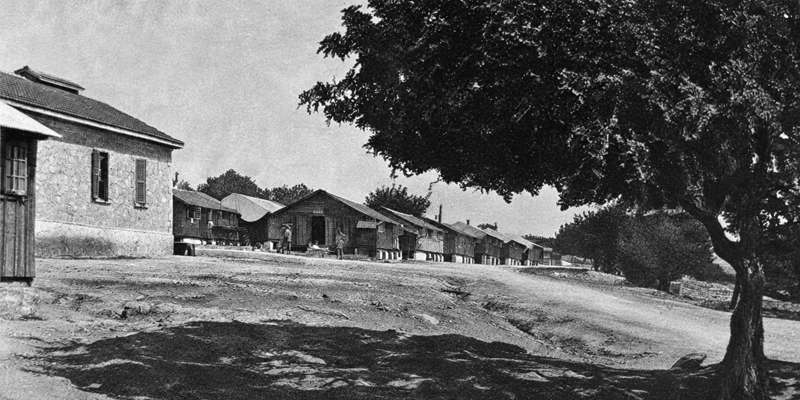
A British camp in Polemidia, near Limassol, where Russian refugees were housed. (Archive of Ann Hogenhuis-Seliverstova)
Starting life anew
Even under conditions of uncertainty people sought the opportunity to return to an independent life. Professional knowledge and skills proved especially in demand.
Doctors and dentists found work; some opened private practices. Engineers participated in technical projects, including those connected with the island’s electricity supply. Women taught foreign languages and music. Advertisements for lessons in French and German, piano, sewing and cutting appeared in local newspapers.
Among the arrivals were opera performers and ballet artists. Already in the summer of 1920 they took part in charity concerts about which the Cypriot press wrote. Preserving their culture and professional skills, the refugees gradually found a place in the new environment.
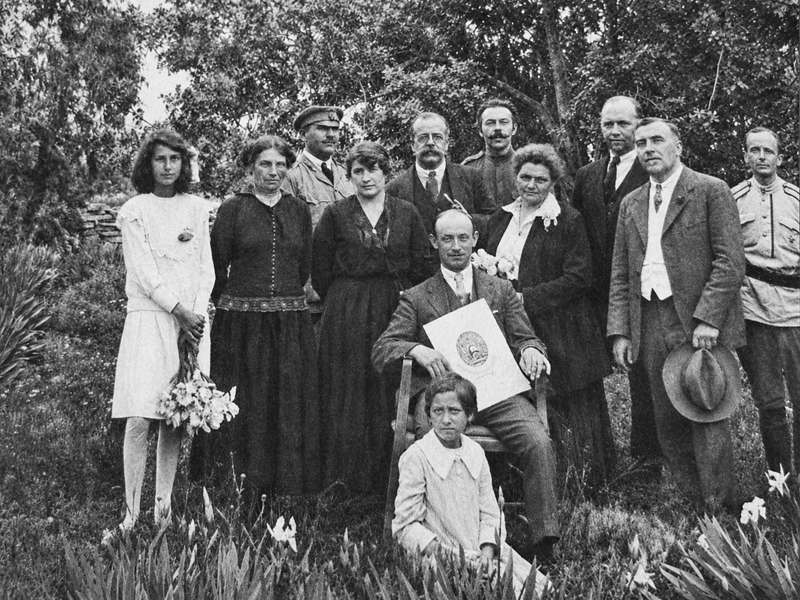
Often one had to start with any available work and a rented room. Then permanent occupations, housing for the family, acquaintances and friendship with local residents appeared. These connections helped to cope with difficulties and to defend the right to remain on the island.
The right to remain
Over time the majority of the refugees left Cyprus. Some went to countries that offered them refuge; others were able to reunite with relatives. For those who remained, 1922 became especially difficult, when the threat of expulsion arose again.
By that time some were already working, supporting families and were connected with the island. Seeking permission to stay, they turned for support to acquaintances, employers and charitable organizations. In individual cases material guarantees were required that the person and his relatives would not need state maintenance.
The story of the doctor Pavel Smiten, cited by Larin, shows how difficult such conditions could be: a life-insurance policy became the guarantee of provision for his dependents.
The small community that remained in Cyprus continued to arrange its life. Its members worked, created families and raised children. Their personal stories became part of the history of the island.
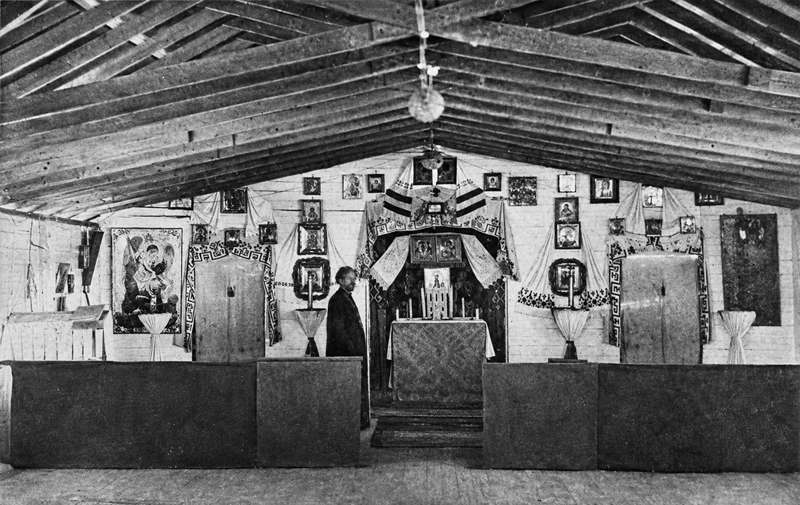
Memory in Polemidia
Not everyone was destined to complete this path to the end. For some of the refugees the Cypriot land became their last resting place. The Russian necropolis in Polemidia preserves the memory of people who survived war, the loss of home and exile. Among those buried here is a participant in the First World War, a Knight of St. George, Lieutenant-General Mikhail Butchik, who died in Cyprus in 1922.
Today these burials help to restore the human dimension to the events of a hundred years ago. Behind every name is its own life, loved ones, hopes and an unfulfilled return.
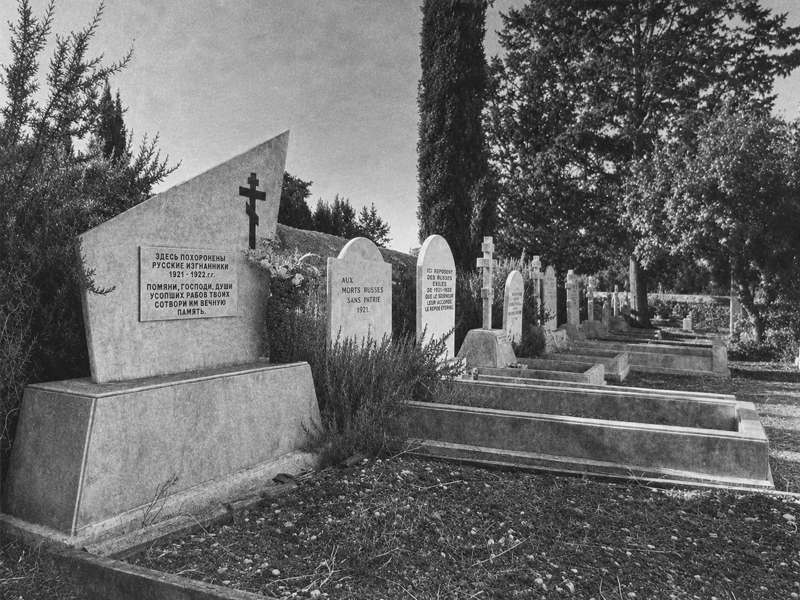
In 2023 the Russian necropolis in Polemidia received the status of a burial place of historical-archival significance for the Russian Federation. In 2024 work began on its restoration and improvement with the support of the Russian Center of Science and Culture in Nicosia. The graves were put in order, Orthodox crosses, memorial plaques and a memorial stele were installed. The ceremonial opening of the renewed necropolis took place on 6 May 2025, on the day of remembrance of St. George the Victorious. Today patronage over the necropolis is exercised by the Historical and Youth Clubs of the RCSC in Nicosia, continuing to care for the preservation of this place of memory.
On 8 November at 11:00 a memorial action will take place at the Russian necropolis in Polemidia in memory of the Russian soldiers — participants in the First World War who found their final resting place on Cypriot soil. All who wish may join this hour of memory and prayer.
Prepared on the basis of the materials of the article by Alexander Larin “Ρώσοι πρόσφυγες στην Κύπρο το 1920” (“Russian refugees in Cyprus in 1920”), journal “Ιστορία Εικονογραφημένη,” No. 699, September 2026.