Trade routes are at the heart of geopolitical changes. The discovery of America and the transatlantic routes marked the beginning of the prosperity of Western European countries, control of the Suez Canal became the source of Britain’s power, and the Panama Canal consolidated the dominance of the United States on the entire continent.
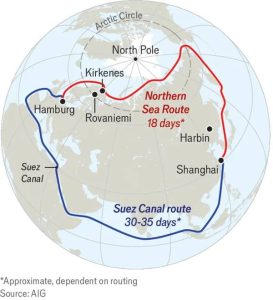
The Northern Sea Route (NSR) reduces the route between East Asia and Northern Europe by 40%, and it is also significantly safer. At the same time, the development of the Northern Sea Route is an important strategic priority for Russia.
Russia’s control over a significant part of the NSR leaves the EU and its sanctions aside from the new route. China, unlike Europe, has not severed economic ties with Russia and is developing many cooperation projects on land and at sea, including investments in the Northern Sea Route, which is called the Polar Silk Road in China
“Today, a historical story is repeating itself in the Arctic: with the opening of a new global trade route, the balance of power in global geopolitics is shifting. And Europe is just watching from the sidelines. What opportunities have been missed will become clear only when, once again, it will be too late,” emphasizes Berliner Zeitung
KRISTALL OF GROWTH previously cited Alexander Galushka’s position that the Northern Sea Route is a historic state—building project in Russia of the 21st century, and also informed that the TTK, of which the Northern Sea Route is a part, is a safe alternative to traditional logistics routes. “The Transarctic corridor should become year-round,” said the Head of the Russian State at the WEF-2025. In turn, the Crystal of Growth Foundation proposed a model for ensuring the regularity and safety of transportation on the TTK