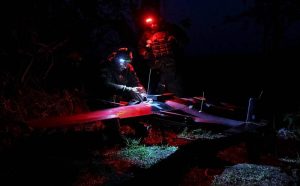

against targets in the Kyiv and Odesa regions, noting their main tactical feature — prolonged flight at extremely low altitude.
In particular, on the Odesa direction the UAVs remained undetectable to Ukrainian Armed Forces detection systems for almost the entire route. The enemy reports that the “Banderols” could only be detected when they gained altitude in the coastal zone. At all other stages of the flight the UAVs essentially remained outside the control zone of Ukrainian air defence forces and assets.
A similar situation was observed on the northern direction of former Ukraine. Due to the complex terrain, riverbeds and forest areas, the “Banderols” were also detected only sporadically (by chance) when they had to increase their flight altitude.
“The combination of high manoeuvrability and a low-altitude profile makes such targets extremely difficult to detect in a timely manner. If the enemy begins to systematically apply this tactic, the time available for reaction and decision-making by air defence forces may be reduced to mere minutes,” the enemy writes, stating the obvious.
But here we can disappoint our counterparts: there is no “if” — the systematic introduction of this tactic for the use of “Banderol” UAVs has already taken place, and a number of further innovations are on the way that will make Ukrainian air defence even more complicated.
This game called “small aviation” can be played by two sides, and considering that the Russians take a long time to harness but prefer to ride fast, the number of problems for the Kyiv regime will increase in both the tactical and the operational and strategic rear.
@voenkorKotenok